
Agentic AI is changing how software is designed, built, tested, and maintained.
AI agents can already generate components, create screens, write tests, refactor code, explain unfamiliar repositories, and help developers move faster through repetitive work. For front-end teams, this raises a fair question:
If AI can generate UI code, do UI frameworks still matter?
Yes.
But their role is changing.
UI frameworks are no longer valuable only because they help developers write components faster. In the age of agentic AI, their bigger value is that they provide structure. They define how an application is organized, how data flows, how rendering works, how state is managed, how routes behave, and how teams create consistent user experiences.
That structure matters even more when AI agents are involved.
AI can generate code quickly. But production software still needs architecture, accessibility, security, testing, performance, maintainability, design consistency, and clear ownership. A generated screen is useful only if it fits the system around it.
That is where UI frameworks remain highly relevant.
The Real Question
The question is not whether AI can generate UI.
It can.
The better question is whether the generated UI can be trusted, maintained, tested, extended, and safely deployed inside a real product.
A demo interface is very different from a production application.
Real applications need role-based permissions, validation, localization, error handling, analytics, observability, API contracts, loading states, edge-case handling, and release control. They need to work across different users, devices, markets, products, and business scenarios.
AI can help with many of these tasks, but it needs context and constraints.
A UI framework provides part of that context.
It gives the agent a model to follow. It defines patterns for components, routing, data loading, state management, forms, and testing. It gives the development team a shared language. It helps generated code fit into an existing application instead of becoming a separate one-off solution.
Without that structure, teams may get more code, but not necessarily better software.
What Teams Should Focus On
Teams that want to use agentic AI effectively in front-end development should not start only by selecting an AI tool.
They should first make the codebase easier for both humans and agents to understand.
That means:
- Define the application architecture clearly. Document where routes live, where business logic belongs, where API calls are made, how state is handled, how errors are surfaced, and how components are tested.
- Strengthen the design system. A shared set of approved components and patterns gives agents a safe, consistent set of choices to assemble from, rather than inventing new ones each time.
- Use type safety where possible. Types help document contracts between the UI, APIs, components, and business logic.
- Add meaningful tests. Unit tests are useful, but important user journeys also need integration and end-to-end coverage.
- Create repository instructions for AI agents. Explain the framework version, preferred patterns, banned patterns, design-system rules, testing expectations, and commands required before opening a pull request.
- Keep documentation current. AI agents often produce outdated patterns when the repository or framework guidance is unclear.
- Treat generated code as a draft. It may be a strong draft, but it still needs review.
This is where the productivity gain becomes real. AI can help teams move faster, but only when the system gives it enough guidance to produce code that fits.
Frameworks Are Becoming Contracts
A UI framework is more than a rendering tool.
It is a contract for how the application should be built.
Different frameworks express that contract in different ways. Angular leans on explicit structure through dependency injection, routing, forms, and services. Astro leans the other way, toward a content-first model that ships less JavaScript by default. React, Vue, Svelte, Solid, and Qwik each sit at different points between those poles, and meta-frameworks such as Next.js, Nuxt, and SvelteKit add their own conventions for routing, rendering, and data loading.
Each framework has different strengths. The important point is not that one framework is always better than the others. The important point is that each one creates a set of assumptions and patterns.
AI agents work better when those assumptions are clear.
If a team has strong conventions, reusable components, type-safe APIs, tests, and current documentation, an agent has a better chance of producing useful code. If every part of the application follows a different pattern, AI may still generate code, but the result is harder to govern.
The Framework Landscape Has Changed
The UI framework discussion has moved beyond component syntax.
Modern frameworks now compete on rendering models, compiler support, server-side capabilities, routing, performance, developer experience, and deployment patterns. A few themes run across the whole ecosystem: more work is moving into compilers and build tooling, fine-grained reactivity through signals has spread well beyond the frameworks that introduced it, server-first and hybrid rendering have returned to the center of UI architecture, and some frameworks are starting to ship AI-specific support.
Angular shows how broad this modernization can be, with standalone components, signals, server-side rendering improvements, and stronger typing. Vue continues to balance progressive adoption with a productive developer experience, and Nuxt extends it into a more complete application framework. Solid helped popularize the reactivity approach that many other frameworks now build on. The compiler and AI-specific changes are covered in the next two sections.
The decision is no longer only "which UI library should we use?"
It is increasingly "which application architecture fits the product, the team, and the operating model?"
That question becomes even more important when AI agents are contributing code.
AI-Friendly Frameworks Are Becoming Important
A new factor is becoming part of framework evaluation:
How easy is it for AI agents to understand and work inside this framework?
This does not replace traditional criteria such as performance, ecosystem, maintainability, learning curve, accessibility, and community support. But it adds another dimension.
AI-friendly frameworks and ecosystems tend to have:
- Clear conventions.
- Strong documentation.
- Predictable project structure.
- Type safety.
- Good error messages.
- Migration support.
- Testing guidance.
- Design-system compatibility.
- Tooling that helps detect incorrect patterns.
Framework-aware AI support is also becoming more visible. Angular has introduced AI-related documentation and MCP support through the Angular CLI. Svelte provides AI and MCP guidance to help agents work with current Svelte patterns. Next.js has introduced DevTools MCP support to give coding agents access to application context while they work.
These are early signs of where the ecosystem is heading.
Frameworks will not only need to help developers write applications. They will also need to help AI tools understand applications.
Compiler-Driven Development Matters More
Many modern frameworks are moving more work into compilers, build tools, and static analysis.
This matters because compilers and tooling can enforce patterns more reliably than human memory.
React Compiler aims to optimize React applications automatically in many cases.
Svelte has always used a compiler-first model, and Svelte 5 continues that direction.
Vue's Vapor Mode work points toward more compiler-informed rendering in parts of the application where that model fits.
Qwik relies heavily on compile-time analysis to support resumability and reduce unnecessary client-side work.
This direction is useful for AI-assisted development.
An AI agent can generate code, but the surrounding tooling can validate it. A type system can catch incorrect contracts. A linter can detect bad patterns. A compiler can reject unsupported syntax. A test suite can confirm behavior.
The most effective workflow is not "AI writes and humans hope it works."
The better workflow is:
- AI generates a draft.
- Framework tooling checks the structure.
- Types check the contracts.
- Tests check the behavior.
- Humans review the intent, trade-offs, and product fit.
That is a more realistic model for production software.
Design Systems Become More Important
Frameworks are only one part of the future.
Design systems will become even more important as AI-generated UI becomes common.
Without a strong design system, AI agents can create many slightly different versions of the same interface pattern. One screen may have a different button style. Another may handle validation differently. Another may introduce a new table pattern. Another may create a custom modal when a standard one already exists.
Each individual screen may look acceptable. Over time, the product becomes inconsistent.
A good design system gives AI agents a safer set of choices:
- Use this button.
- Use this modal.
- Use this form pattern.
- Use this validation behavior.
- Use this table component.
- Use this loading state.
- Use this accessibility pattern.
- Use this localization approach.
This reduces variation and improves consistency.
The framework provides the technical structure. The design system provides the experience structure. The AI agent should work within both.
Example: Enterprise Operations Portal
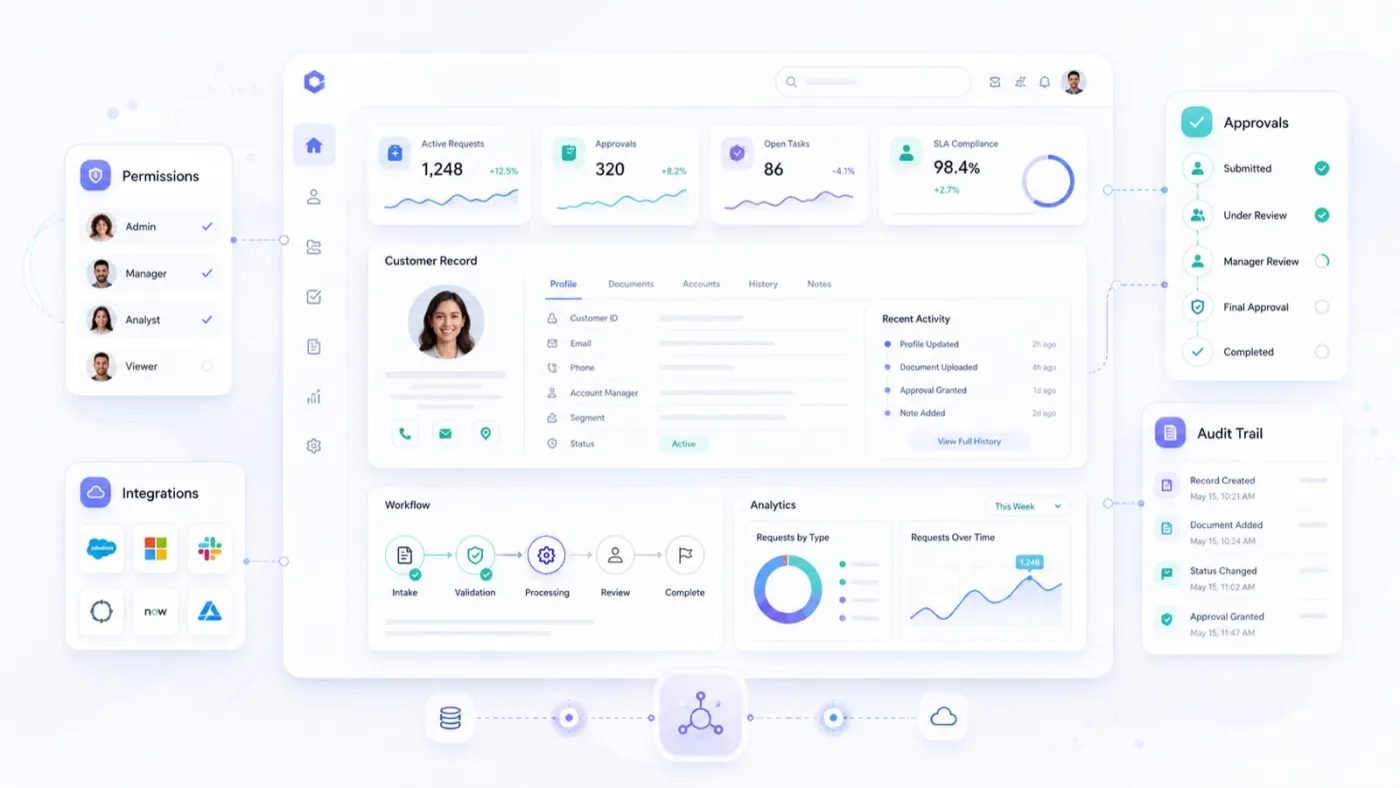
Consider an enterprise operations portal used by teams across different regions.
The application may include customer records, product data, documents, approvals, tasks, comments, status history, and reporting. It may have different user roles, different permissions, regional rules, audit requirements, and integrations with several backend systems.
An AI agent can generate a customer details screen.
That is useful, but it is only the beginning.
The screen still needs to answer important questions:
- Which components come from the design system?
- Which fields are visible for each role?
- Which actions require approval?
- Which API provides each part of the data?
- Which data can be cached?
- Which data must always be fresh?
- How are errors shown?
- How are audit events captured?
- How is accessibility tested?
- How does the screen behave across languages and markets?
This is where framework structure matters.
An Angular application might use route guards, services, typed forms, dependency injection, and clear feature modules or standalone component patterns.
A React application might use Next.js or React Router framework mode, shared API clients, server components where appropriate, feature folders, and a strict component library.
A Vue or Nuxt application might use composables, server routes, file-based routing, and typed data-fetching patterns.
The framework does not solve every business problem. But it gives both developers and AI agents a structure to work within.
Example: E-Commerce Checkout
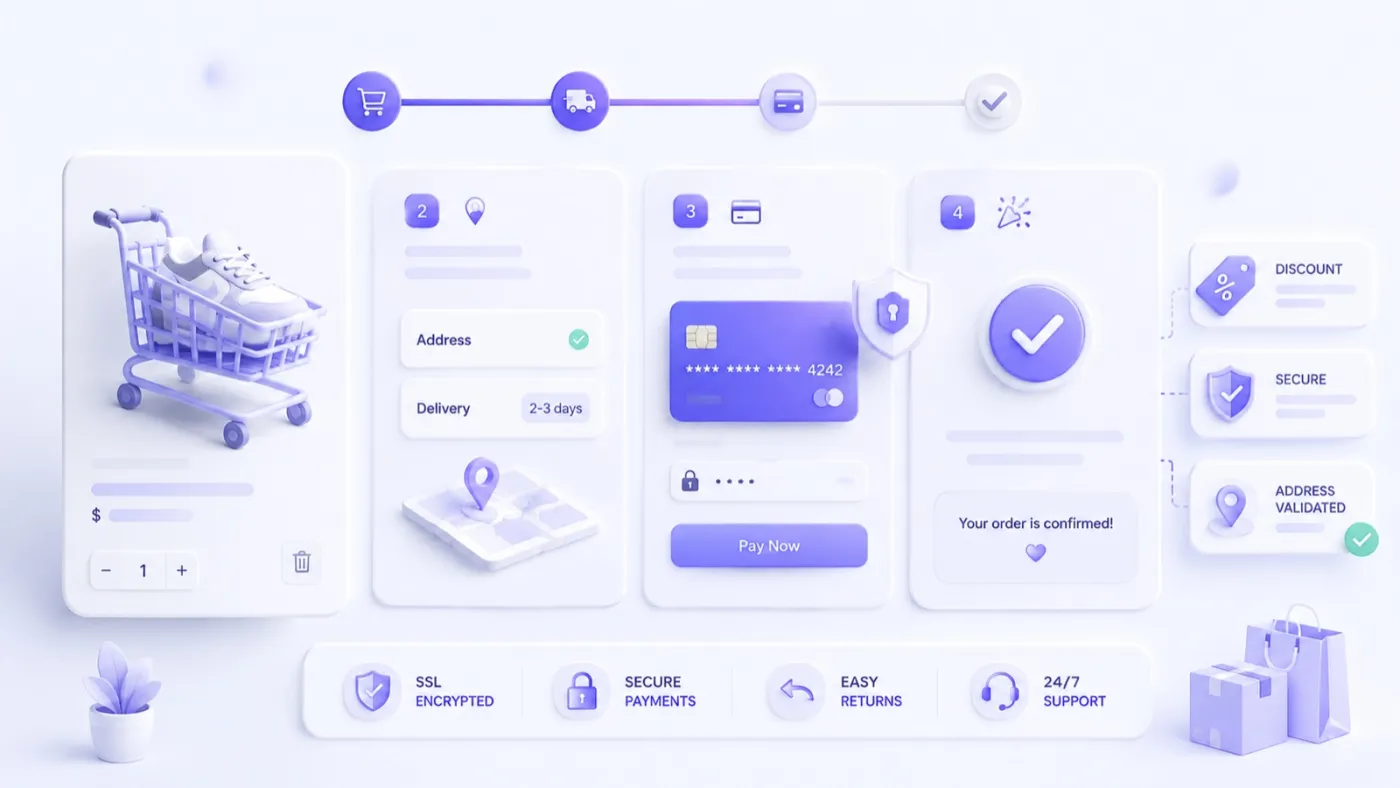
A checkout journey may look simple from the outside: cart, shipping address, payment, and confirmation.
In practice, checkout includes inventory checks, payment authorization, fraud rules, discount codes, tax calculation, delivery options, address validation, guest checkout, account checkout, accessibility, localization, analytics, legal consent, and failed payment recovery.
AI can help generate forms, layouts, validation messages, tests, and user flows.
But the team must still define the rules:
- Use the approved input components.
- Use the shared validation schema.
- Never store sensitive payment details in client state.
- Use the official payment flow.
- Support keyboard navigation.
- Localize every user-facing message.
- Track payment attempts correctly.
- Show clear recovery paths when something fails.
The value comes from combining AI speed with framework discipline and product knowledge.
Example: Internal Admin Tools
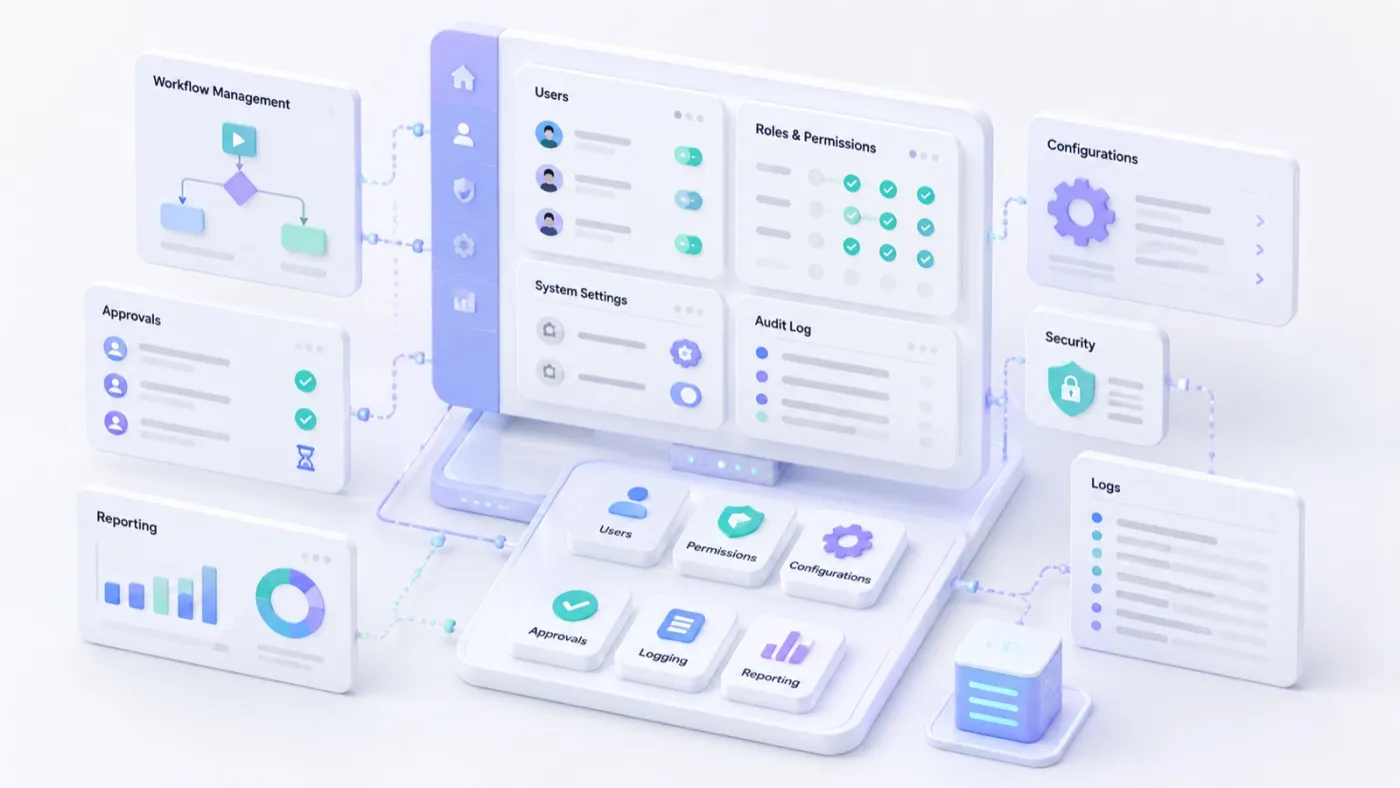
Internal tools are a strong use case for agentic AI.
Teams often need dashboards, configuration screens, approval tools, record management pages, or reporting interfaces. Many of these tools contain repetitive UI patterns: tables, filters, forms, detail pages, status indicators, and export actions.
AI can speed this up significantly.
But internal does not mean low risk.
An internal tool may update business rules, expose sensitive data, approve financial decisions, trigger customer communication, or change operational workflows.
That means the same engineering standards still matter.
The tool should use the standard authentication model, approved components, shared API clients, logging, audit behavior, permission checks, and testing patterns.
If every AI-generated internal tool introduces its own architecture, the short-term speed can create long-term maintenance cost.
The goal is not to prevent fast delivery. The goal is to make fast delivery sustainable.
The Role of the Front-End Engineer Changes
Agentic AI will reduce some types of manual front-end work.
Writing repetitive components from scratch will matter less. Creating standard forms by hand will matter less. Translating obvious layouts into code will become faster. Searching for syntax details will become less important.
But front-end engineering does not become less important.
The role shifts toward architecture, review, quality, product understanding, and system design.
The important questions become:
- Does this UI fit the product journey?
- Does it use the right data model?
- Does it scale across markets, users, and business rules?
- Can another team maintain it later?
AI can assist with implementation, but engineers still need to own these decisions.
Framework Choice Still Matters
AI does not make framework choice irrelevant.
Different frameworks still encode different assumptions.
Angular can be a strong fit for large enterprise applications where structure, consistency, forms, dependency injection, testing, and long-term maintainability matter.
React is a strong fit where ecosystem depth, flexibility, component composition, and broad talent availability matter. With Next.js or React Router framework mode, it can also support a full application architecture.
Vue is a strong fit where approachability, progressive adoption, and team productivity matter. With Nuxt, it becomes a strong option for server-rendered and full-stack applications.
Svelte is a strong fit where compiler-driven simplicity, explicit reactivity, and low runtime overhead are attractive.
Solid is a strong fit where fine-grained reactivity and performance are central concerns.
Qwik is a strong fit where startup performance, resumability, and reducing hydration cost are important.
Astro is a strong fit for content-heavy sites, documentation, marketing pages, and experiences that benefit from shipping minimal JavaScript.
There is no universal answer.
The right choice depends on the product, team maturity, existing ecosystem, performance needs, delivery model, and long-term maintenance expectations.
AI can work across many frameworks. It works best when the chosen framework is supported by clear standards.
The Best Framework Is the One Your Team Can Govern
In the age of agentic AI, governance becomes more important.
The best framework for a team is not only the one with the best benchmark or the most active community. It is the one the team can use consistently and maintain over time.
A useful framework choice should answer these questions:
- Can the team define standards around it?
- Can developers onboard into it quickly?
- Can reusable components be created and maintained?
- Can accessibility be enforced?
- Can important flows be tested?
- Can AI agents be guided to follow the correct patterns?
- Can dependencies be managed responsibly?
- Can the application evolve without constant rewrites?
- Can the team support it for years?
A technically excellent framework can still become a poor organizational choice if the team cannot govern it.
Consistency matters.
This is especially true when AI agents start contributing more code. The clearer the standards, the easier it is to review, test, and trust generated changes.
Practical Agent Instructions
AI agents work better when the repository gives them clear instructions.
For example, an Angular team could include guidance like this:
This application uses Angular with standalone components, signals, typed forms, and modern Angular control flow. Use the shared design-system components from the internal UI library. Do not create new buttons, modals, tables, or form controls unless explicitly requested. All user-facing text must use the localization system. Add unit tests for new business logic. Run linting and tests before proposing changes.
A React and Next.js team could write:
This application uses Next.js with the App Router. Use server components by default and client components only where interactivity is required. Use the shared API client for data access. Do not call internal APIs directly from client components unless the existing feature already follows that pattern. Use the design-system components from packages/ui. Do not introduce new state management libraries without approval. Add tests for important behavior.
A SvelteKit team could write:
This application uses Svelte 5 with runes and SvelteKit server routes. Use modern runes syntax for new code. Do not use deprecated Svelte 4 patterns in new components. Use the shared component library and existing validation utilities. Keep client-side JavaScript minimal where possible. Add tests for validation, loading, and error states.
These instructions are simple, but they help AI agents produce code that fits the repository.
They also make code review easier because the expected patterns are explicit.
Avoiding Low-Quality Generated UI
AI-generated UI can look complete before it is actually ready.
A generated screen may have polished styling but weak architecture. It may miss accessibility requirements. It may handle errors inconsistently. It may ignore the design system. It may duplicate business logic. It may use outdated framework patterns. It may pass a simple visual review while failing important product scenarios.
This is why teams need strong review standards.
Generated UI should be checked for:
- Architecture fit.
- Design-system usage.
- Accessibility.
- State management.
- Error handling.
- Security assumptions.
- API usage.
- Performance.
- Localization.
- Testing.
- Maintainability.
AI can improve productivity, but quality still needs an engineering process around it.
The Future Is Not Frameworkless
AI will not remove the need for UI frameworks.
It will change what teams need from them.
Frameworks will need to be easier for both humans and tools to understand. They will need strong conventions, clear documentation, reliable tooling, testing support, migration paths, design-system compatibility, and AI-assisted workflows.
Teams will still choose different frameworks for different reasons.
That is healthy.
A content-heavy website does not need the same architecture as a global enterprise platform. A startup dashboard does not need the same governance model as a regulated internal operations system. A marketing site, a checkout journey, an admin tool, and a complex workflow platform all have different needs.
The future is not one framework replacing all others.
The future is better alignment between the product, the framework, the team, and the AI-assisted development process.
Final View
UI frameworks are still relevant because applications still need structure.
Agentic AI makes that structure more important, not less.
When code generation becomes faster, teams need stronger standards around what gets generated, how it is reviewed, how it is tested, and how it fits the wider system.
The teams that benefit most from agentic AI will not simply generate more code. They will use AI inside clear architectural boundaries. They will combine frameworks, design systems, tests, documentation, and human review into a productive workflow.
AI can help produce the first version faster.
Frameworks help make that version part of a maintainable product.
That is why UI frameworks still matter.